Illegal recruitment fees push seafarers into debt, erode vessel safety, and expose shipping companies to growing legal and reputational risk. This resource combines the latest research evidence with a practical compliance toolkit for employers.
What are recruitment fees?
According to the ILO Maritime Labour Convention 2006 (as amended), "no fees or other charges for seafarer recruitment or placement … are borne directly or indirectly, in whole or in part, by the seafarer, other than the cost of obtaining a national statutory medical certificate, the seafarer's book and a passport — not including the cost of visas, which shall be borne by the shipowner."
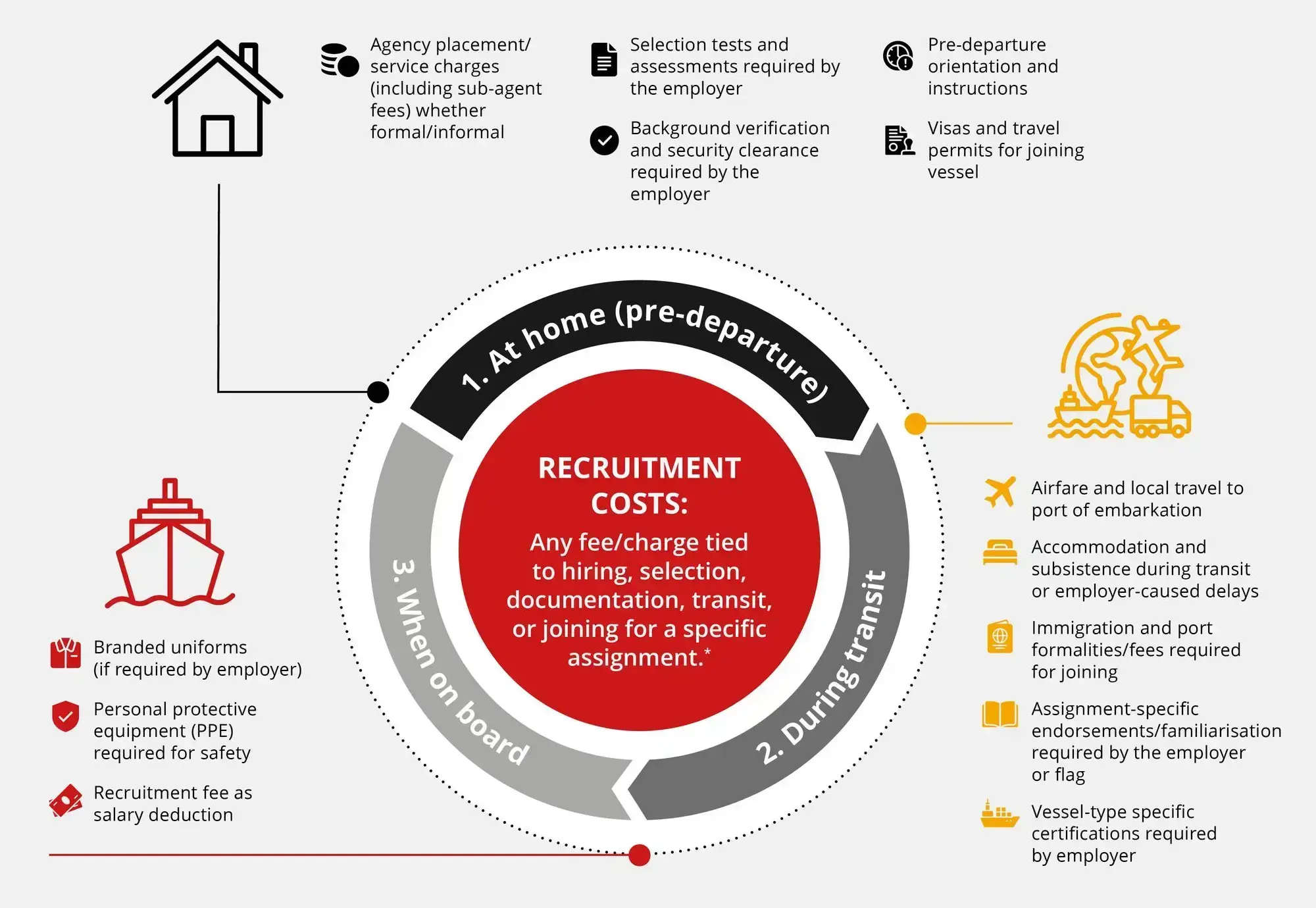
In addition to recruitment fees are a host of additional costs whose legitimacy and responsibility are not clear in law. There are also costs and charges that violate not only MLC but anti-corruption norms and national law. The below graphic aims to encapsulate these. Costs can accumulate all along the seafarer's journey from home (1.) through transit (2.) to vessel (3.). It should be noted that the distinction between the various categories is not always easy to define. It is also not always clear who the employer is or where accountability lies. The 'beneficial employer' is whoever is operating the ship, and is arguably who should be responsible for costs relating to recruitment.
Recruitment fees are not always charged openly. In practice, they may be disguised as inflated training charges, medical facilitation fees, document processing costs, advance cash payments before onboarding, or loans linked to job placement. Even where they are described differently, such payments may still amount to recruitment fees if the seafarer is required to pay in order to secure or keep a job.
There are many actors involved in the costs outlined below, and beneath the graphic we have included a table.
Prohibited practices
Actions that violate MLC or anti-corruption norms
Contract substitution: Replacing a signed contract with worse terms at departure or on board.
“Security deposits” or any deductions functioning as wage theft
Demands for gifts/bribes; informal kickbacks
Unpaid apprenticeships or work before embarkation
“Sponsorship”/tie-ins with private institutes that condition access to jobs
Scams or situations where there is no job at all
Red flag: “Job not as promised” (misrepresentation of role/rota/pay/conditions)
Document Abuse — A Separate But Related Violation
Holding Identity Documents
Retaining passports, certificates of competency, or any other identity documents as 'security' at any stage of recruitment or employment. While some ships legitimately hold documents for safe-keeping during voyages, crewing agencies and managers should not unlawfully withhold passports.
While this is not a recruitment fee, such practices could be attributed to coercion tactics, such as the retention of documents to ensure payment of a recruitment fee. Document confiscation is a recognised indicator of forced labour and trafficking under ILO Convention No.29 and the Palermo Protocol.
Stage
Event
Main actors
At home
Agency placement / service charges, including sub-agent charges
Local broker, sub-agent, licensed crewing agency
Selection tests and assessments required by the employer